
It's our weekly news roundup.
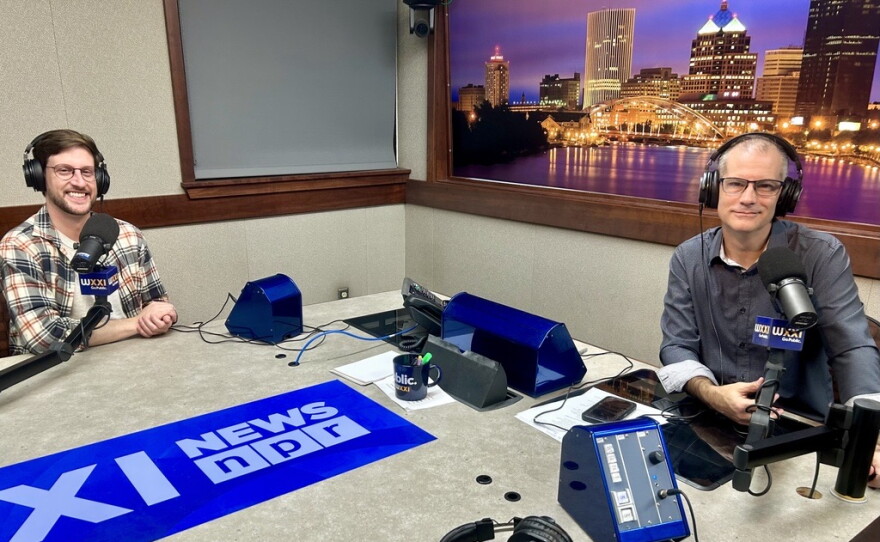
The city of Rochester is short hotel rooms. That's according to Deputy Mayor Michael Burns. As reported by WXXI's Brian Sharp, the 2020 closure of the Rochester Riverside hotel and the more recent shutdown of the Wyndham has left a dearth of rooms. Meanwhile, the Hyatt Regency is slated for a $16 million renovation — a "positive note" amid the other hotels' uncertain futures, according to the Hyatt's general manager. What does the future hold? And how many rooms does Rochester need to support local travel and tourism? We talk to Sharp about the latest with downtown development. In studio:
- Brian Sharp, investigations and enterprise editor for WXXI News
Then, we celebrate Rochester radio legend Scott Regan. The longtime host of "Open Tunings" on The Route will host his final weekday show on October 30. He'll continue to host his Saturday broadcast. Regan sits down with us to discuss his career, his music, and what he has loved and learned during his 22 years of "Open Tunings." In studio:
- Scott Regan, host of "Open Tunings" on The Route
We end the week with a discussion about the most talked-about film currently on screen. "You Can See Everything" is a documentary about disgraced Theranos founder Elizabeth Holmes. The former CEO was convicted of defrauding investors and is serving an 11-year prison sentence. The film follows Holmes in the 34 days before that sentence began and has left audiences questioning what is fact and what is fiction. Our guests share their perspectives, and we invite you to weigh in as well. Our guests:
- Scott Pukos, director of communications for The Little Theatre
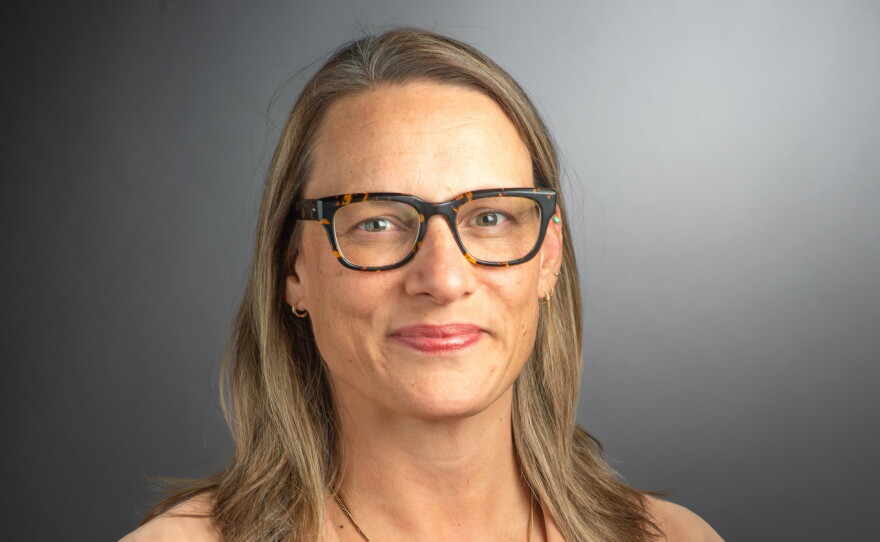
- Amy Adrion, filmmaker and assistant professor in the School of Film and Animation at RIT
*Notes:
- Abilene is hosting a celebration of Scott Regan on Tuesday, November 10, 2026. The event is open to the public.- everyone welcome to come wish him well.
- Linda Moroney, programmer for the One Take Documentary Series and co-founder of the Rochester Teen Film Fest, was invited to join this conversation, but was unavailable to participate. She sent the following thoughts:
I’ve been programming, making, and teaching documentary films for years. I fell in love with them for many reasons, and one is that the truth is often stranger than fiction. So, this fall has been a treat. People are lining up at the cinema for nonfiction works, and they can’t stop talking about what they’ve seen. One of the things I appreciate about "You Can See Everything" is how it’s made. The first half is full of close-ups, as if the directors are studying their participants (we don't say subjects anymore) under a microscope and making us do the same. We settle in, sure we know what we’re watching. Then it unravels, like a sweater when you pull one loose thread. What we thought we knew gets pulled apart, and we have to ask what we actually knew. That’s the thrill of it. And the line between fiction and nonfiction? That’s as old as the form itself. Nanook of the North, from 1922, is often called the first feature-length documentary, and its director staged scenes and directed his participants. There are real ethical problems with that film, and we should name them. But when it was made, the word “documentary” hadn’t even been invented. Nobody had written the rules yet. This art form was born in the blur. Filmmakers have been working in that gray area ever since. Orson Welles’ "F for Fake" is an essay film about forgers and fakery that keeps teasing you about what’s true. Robert Greene’s "Actress" follows Brandy Burre, a performer deciding whether to return to acting, and you can never quite tell where her life ends and the performance begins. "You Can See Everything" also takes questions we’ve been asking in the industry for a decade to a much wider audience. Do we pay the people in our films? What would that change? What is someone’s story worth? What if we don’t love our participants? Is it right to build our careers on other people’s lives and not pay them for it? Documentaries can be as layered as any fiction film, and they can be funny, tense, or even dangerous. Go see this one on a big screen, then stay in the lobby and discuss it with friends and strangers. Truth, as I said, is stranger than fiction.