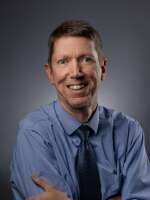
A Chicago-based startup called Town Square Health has chosen Rochester for its first medical office.
The primary care practice catering to seniors recently began accepting patients, and expects to open in September at South Clinton Avenue and Westfall Road in Brighton.
Initially, Town Square Health will operate like any other doctor’s office. But as the practice grows, the plan is to move away from a traditional healthcare model to one organizers say has been done in other parts of the country — but not here.
"We're starting on a very small scale,” said Dr. Michael Mendoza, senior medical director and the chief primary care physician at Town Square Health, for now. "We're a small practice. Medicare-only patients. ... But the hope is as as if we can demonstrate success, that we can grow."

Instead of billing for each medical test or service, and providing referrals to specialists, Town Square Health will negotiate with insurers and receive a flat fee for Medicare and Medicare Advantage patients.
“Then our job is to take care of all of that patient's expenses,” Mendoza said. “And the idea is to help them to not need to go to the hospital, and not need to have expensive medical procedures when possible, so that we keep them healthy and then save the health system money.”
The goal is to become a multi-specialty clinic. And patients would see specialists like a cardiologist or urologist in the same visit and at the same time that they see their primary care doctor, rather than getting referrals and having separate appointments.
The result, advocates say, is a coordinated, team approach to care that simplifies matters for the patient and improves follow-through. The specialist, if not in house, would then bill Town Square Health at a negotiated rate.
Pros and cons
Town Square Health founder Dr. David Buchanan previously worked at CVS Health and Oak Street Health, which touts a “tech-forward approach” to affordable healthcare. More on that later.
Mendoza most recently was senior vice president and COO of Trillium Health, and before that was the Monroe County public health commissioner for seven years, including during the COVID-19 pandemic.
While Buchanan and Mendoza have known each other for years, Rochester was chosen because it has an aging population, company officials say, presenting a large pool of Medicare patients. Its limited number of insurance providers was also a draw — dominated by Excellus, which is already familiar with the value-based model.
The model has its roots in the Affordable Care Act of 2008, and today is credited with billions in annual Medicare savings that are then shared between providers and the government program. The hope is the savings spread, so insurance companies can lower premiums, benefitting individuals and businesses alike.
Seeing the potential, the federal government has worked to encourage buy-in. But the push reportedly is struggling with participation from physicians, who see it as a financial risk, and increasingly led by hospitals that see the greatest financial benefit from admissions.
Value-based care is practiced in varying forms locally, but Mendoza and others with Town Square Health say the holistic, fully-coordinated approach they are planning is not.
"To my knowledge, it hasn't been tried here in primary care,” he said. “And the reason it's hard to do that is because you have health systems, currently, whose primary source of revenue is procedures and diagnostics and, you know, hospital care — acute-level hospital care.
“Primary care is important,” he continued, “but it doesn't tend to make a lot of money.”
Critics say the model can inadvertently incentivize providers not to seek expensive treatments that might be necessary. And the physicians’ financial risk is real. Town Square Health aims to cap individual physician’s patient load at 500, instead of the standard 2,000 — which means less revenue, unless they deliver savings.
Mendoza, though, insists the focus is the patient, whatever care is needed He likens it to not suggesting knee replacement as a first, most efficient option, but starting with weight management and physical therapy, which is ultimately better for the patient in the long-run. The greatest savings are found with those who have multiple health issues that have gone unaddressed or been ineffectively treated, and the model is effective precisely because it provides more regular contact between doctors and patients.
Quality over quantity
One of the early challenges is building awareness and trust in the community. That has involved doing presentations to various groups and being visible.
Representatives from Town Square Health have recently set up tables at the Lilac and Corn Hill festivals, hearing from potential patients with various reasons for their interest.

“They're having significant wait lists, you know, to get a doctor,” said Dominique Richardson, outreach and education manager for Town Square Health. “They're also worrying about the quality of care of maybe having a 10-minute appointment and not getting everything they want addressed during that appointment.
“They're also just dealing with issues that should be maintained by a primary care doctor, but they're going into urgent care,” she said. “They're going to our emergency rooms to just get diabetes medication, hypertension medication.”
Town Square Health has not struggled to find doctors, nurses and other medical professionals interested in applying, Mendoza said, despite a shortage of in most fields locally and across the country. The priority is primary care physicians, nurse practitioners and physician assistants.
"This is the kind of medicine I think a lot of my colleagues have wanted all along, you know, to be thinking about our work not in terms of volume but in terms of quality,” he said.
The model leans heavily on technology, particularly artificial intelligence, to estimate those patient costs, and prioritize patient messages, but also to distill patient notes and records to flag or even order tests, procedures and schedule those follow-ups. But Mendoza said patients can opt out of AI tools if they wish.
“We want to provide a different model, a different way of thinking about things,” Mendoza said. “But you know, in the grand scheme of things, we're going to be a small, small player in our community. And if we can demonstrate that things can be done differently, maybe we can, you know, lift all boats, as it were.”