Rochester has been selected to become a federally and state-funded national hub for laser science and development, officials said Tuesday.
The initiative will receive $15 million over the next two years from the National Science Foundation, and matching funds from New York state.
What’s being called NSF STELLAR Engine is part of a nationwide program created under the CHIPS & Science Act establishing focus areas for research, workforce training and entrepreneurship in areas like artificial intelligence, climate research and biotechnology.
The University of Rochester will take the initial lead on the laser program that will have reach across the region. Operations will be based in downtown’s Sibley Square, officials said, with expectations to expand into the Lake Avenue building that houses the national photonics hub.
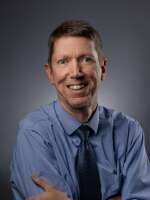
“One of the things that's really significant, but underappreciated ... is how much our lives depend on laser technology,” said Tom Brown, director of UR’s Institute of Optics. “There's $16 trillion worth of goods and services that wouldn't happen without laser technology.”
That includes the internet, semiconductors, 3D printers. However, much of the production is based overseas.
“Many people think lasers are the future for fusion-based clean energy solutions,” Brown added. “Many people think laser-based technology (is) going to be the next generation of really, really sensitive sensors for biomedicine for blood testing or things of that sort.”
Brown is principal investigator for STELLAR (Science, Technology and Engineering for Laser and Laser Applications Research), which currently exists as a program within UR. The university will oversee its migration over the next two years into a separate nonprofit that can exist on its own.
U.S. Sen. Chuck Schumer, D-New York, who is the architect of the CHIPS & Science Act, heralded the local award. The state funding runs for six years. Each NSF “engine” can receive up to $160 million in federal dollars over 10 years, depending on its status and progress, which will be assessed yearly.
Project funding has remained intact despite threatened cutbacks and shakeups at the National Science Foundation — including President Donald Trump firing the entire NSF board earlier this year.
"There has been a lot of sort of reorganization going on in the federal government," Brown said, but added that overall funding has been "doing pretty well" even outside the regional innovation engine. "I will say that the the support for this type of research and the type of research I would say more broadly that we do at the Institute of Optics tends to be pretty significantly bipartisan."
Other local partners include Rochester Institute of Technology, the National Technical Institute for the Deaf at RIT, Monroe Community College and Next Corps. But also organizations like the Rochester Museum & Science Center, marshaling efforts to also “try to educate students and get them excited about careers in lasers and laser science,” Brown said.
“Our goal on the STELLAR regional innovation engine,” he added, “is to make sure that there's a place, a company in the area, or an opportunity in the area for every student, every graduate that wants to stay in the area.”