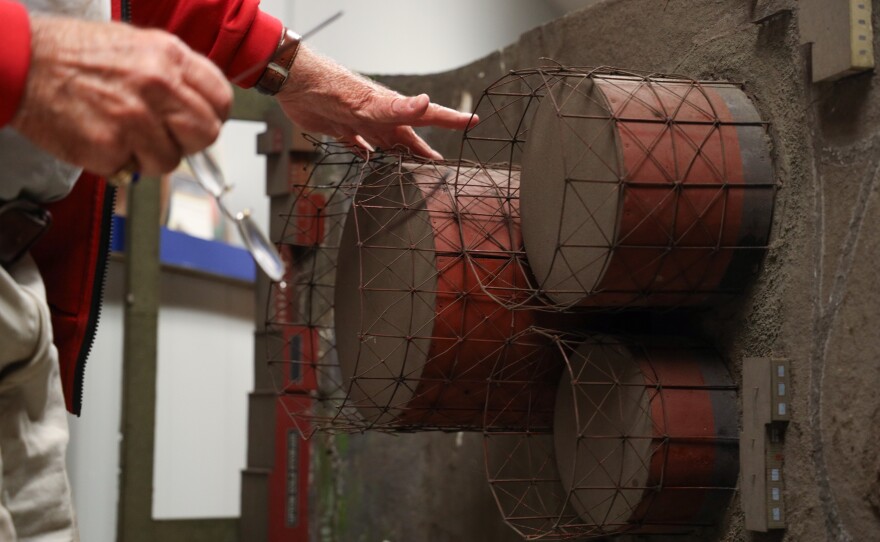


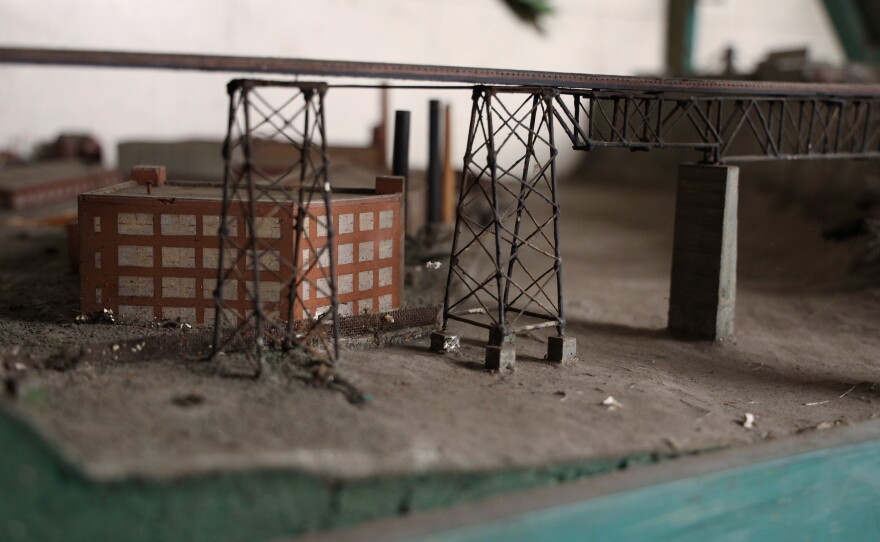
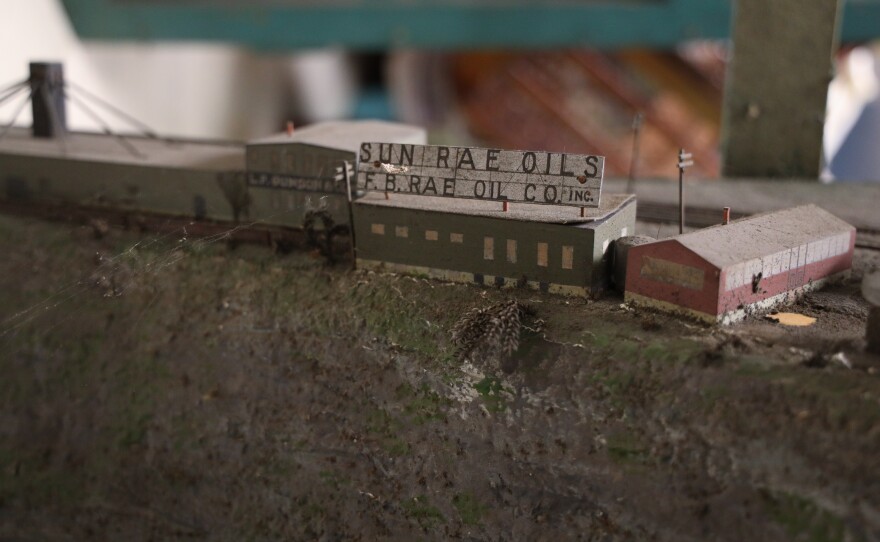
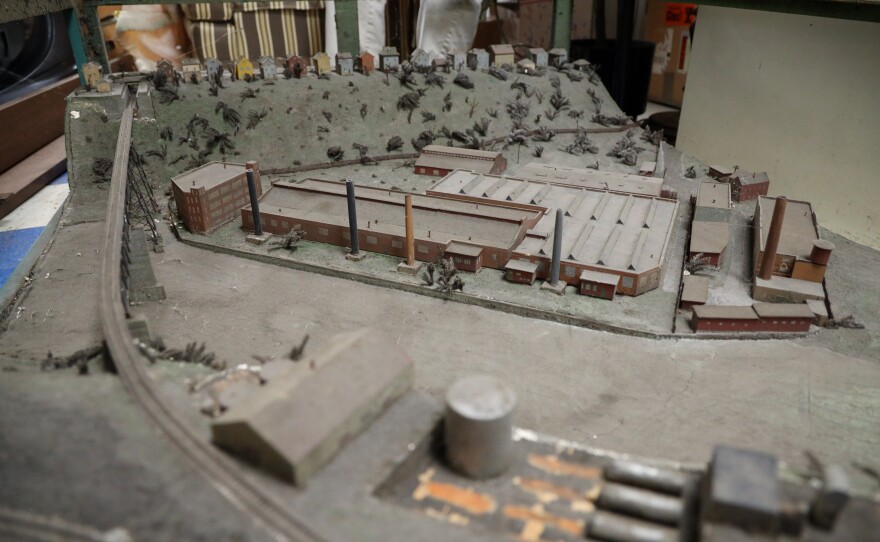
A gigantic, dust-covered diorama stashed in a roadside building outside Palmyra depicts a long-forgotten scene in Rochester from more than a century ago.
“This is the beginnings of what it started as,” said Clark L. Rittersbach, who, at 82, has held onto this model for most of his adult life.
The model, he said, used to be displayed in the offices of Rochester Gas & Electric, his former employer, and depicts the local utility and other manufacturers’ operations in the Genesee River gorge just north of downtown more than a century ago.


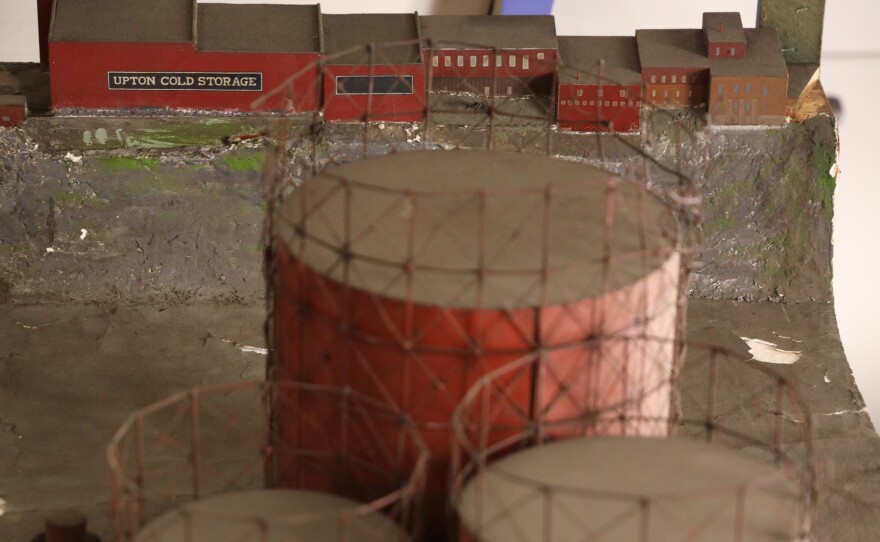
Buildings recreated to scale fill the river valley, and an array of smokestacks rise between the towering gorge walls. In addition to RG&E structures, and the long ago-razed Bausch + Lomb glass plant, the model — measuring roughly 8-foot square — shows an old tannery and large gas storage tanks.
For more than 150 years, industry dominated this otherwise hidden section of the city just beyond High Falls, drawn by the water and the powerful cataract. Today, though, nearly all of those built structures are gone, and plans are moving forward to turn the 2.5-mile stretch into a park — though still paying homage to bygone eras.
Rittersbach thinks the model should be part of it, restored and put back on display.
In the model, Upton Cold Storage sits perched atop one side of the gorge. And houses still line much of the other side, fronting St. Paul Street.

“All these houses are as they appeared,” Rittersbach said. “Each one is different, and each one is to scale.”
Telling the 'whole story'
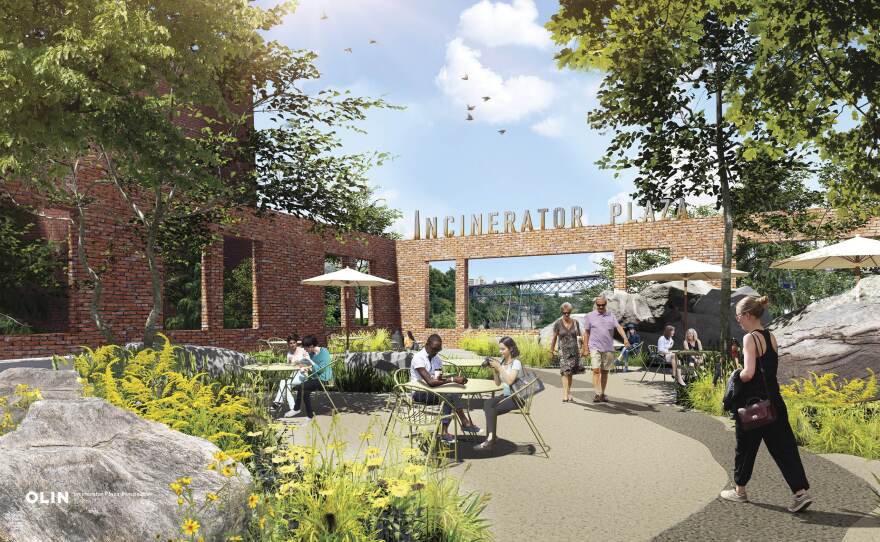
The acreage frozen in time in the diorama is envisioned in the latest park plan as a “relics garden” and woodland grove.
While the renderings of what could be spark the imagination, reflections of the gorge’s grimier history — including one depicting “Incinerator Plaza” — have drawn criticism and mockery.
But the New York state parks system's “Our Whole History Initiative” aims to highlight “the many stories that have taken place at High Falls ... beginning with the Haudenosaunee presence through to more current industrial uses,” said Carl Flora, the architect on the High Falls park project.
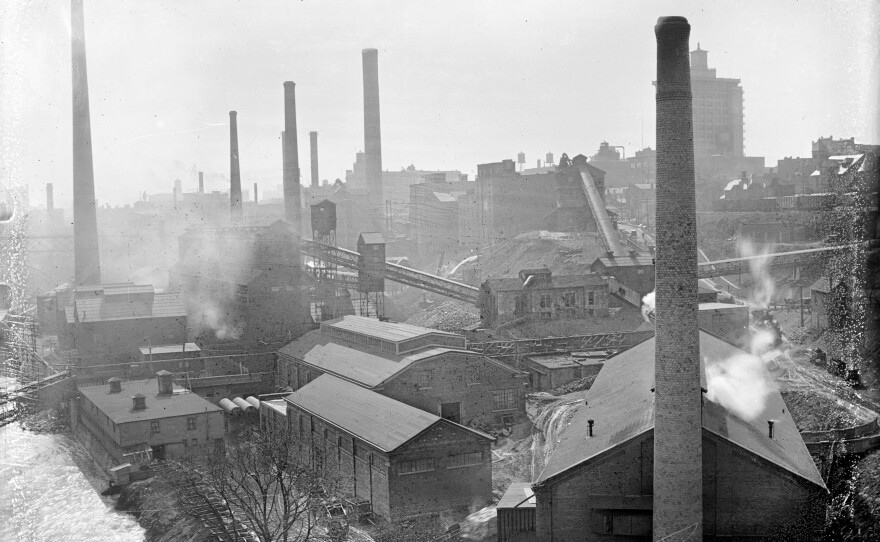


In the model, "you’ve got the original gas works production plant that made the gas for the street lamps,” said Rittersbach, a former RG&E chemist who worked in the gorge in the 1970s. "I worked in the main chem lab, which is about the only building that's remaining.”
The detail in the model extends to the trees, even a pile of debris and a single set of power poles.
“The curious thing is, you know, you can see some power lines along here for RG&E because they had to have something to power this place,” he said. “But you don't see them on the rest of the streets, because they didn't have electric there."

In addition to RG&E’s east and west manufactured gas plants on either side of the river, there was the coal-fired Beebee Station, which had not yet been built at the time of the model but was demolished about 10 years ago. There was a hydro plant, the brick building still visible at the base of the falls. The remnants of the former city incinerator also still stand.
“So, a lot of industrial activity, you know, turn of the century, industrial revolution,” said Jeremy Wolf, director of the environmental remediation group for RG&E.
"That industrial nature of that whole area just carried over,” he said, from the days of the flour mills first built the city.
The model doesn’t extend to High Falls, but the cascade at that time was a thundering 96-foot drop. Today, it measures 80 feet, reduced in and around 1915, as the city blasted the riverbed deeper to control downtown flooding. Doing so eliminated a 14-foot “Upper Falls” that used to exist between Main and Broad streets.

'They thought I was crazy'
The push to clean up the gorge precedes talk of the park. Bausch + Lomb decontaminated and demolished its glass plant in the early- to mid-1990s. The plant original dated to 1910, and was reconstructed after a fire in or around 1914. An environmental site assessment has documented raceways and possible ferry slips present at the site as early as 1851.
RG&E is wrapping up work on the west side of the river, while preparing to bid the east side cleanup next year to get underway in 2027. That eastside cleanup project is expected to take three years to complete, and cost in the range of $60 million, officials said, or roughly twice that of the westside cleanup.
But this industrial past memorialized in the diorama is not being erased entirely.
The smokestack of the old city incinerator will remain. And likely some portion of the structure. What’s left of the RG&E buildings, though, including the chem lab, will be razed. And the area depicted in the model will otherwise revert to something closer to what it was before anything was built.
A lifelong collector of things, Rittersbach happened upon the model when he was in his 20s — more than a half century ago. RG&E had moved most of its offices out of the gorge.

“When they didn't know what to do with (the model), they decided to take it back and leave it on the river in the old administration building,” he said. “I gave them some money for everything I could carry out the door, and they took me up on it.
“Of course, they thought I was crazy at the time.”
Still to be decided is what to do with some of the utility underpinnings still in use today.
A large gas main traverses the site, and a gas regulator station (not a building, but a set of pipes and some valves) sits roughly where the envisioned east lawn or woodlands could be.
There is a chance some of the infrastructure can be moved or changed in some way, officials said. But it is likely that some will need to remain, and will be designed into the park, along with the remnants. Not covered up, officials said, but front and center.