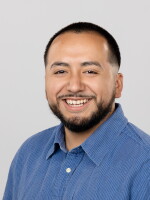
Rosa Vargas was 3 years old when her family emigrated from the Dominican Republic to New York City in search of a better life— the American dream.
“It was four children that they (her parents)brought to this country,” Vargas said. “We wanted the American dream. We wanted that white picket fence, and the opportunity to really be something that you only dreamed of being.”
Vargas remembers many things like the freezing cold when she first moved to the Washington Heights neighborhood, refusing to speak because she was upset about the move and her dad working all the time.
She felt as if his work ethic was instilled in her and her siblings.
“I saw that a lot doing this project and these stories of
immigrants, they all have that that intrinsic line of you know we are here to work and become better than we were when we came to this country,” Vargas said.
Those experiences shaped her contribution to “Sanctuary: Borders & Belonging in 2026,” an exhibition at the Rochester Contemporary Art Center featuring 11 different installations by artists from across the country and the Rochester area.
The exhibition is meant to address the social and political climate surrounding immigration today, said Bleu Cease, executive director of the Rochester Contemporary Art Center.
“If we weren't talking about the politics and the divisions that are being sown around immigration right now— ICE, immigration policies, detentions, detention centers— if we weren't talking about that as an organization, when many artists are addressing this topic through their work, then we wouldn’t be doing our job, frankly,” Cease said.

The exhibition also includes two community-based projects.
The first, “(I’m)Migration,” features more than 60 artworks by immigrants and immigrant collaborators living and working in the Rochester region.
The second, “Community Interview Project: The Immigrant Experience,” showcases nearly 100 short interviews of immigrants from Rochester and the surrounding region, offering a wide-ranging portrait of what it means to come to, live in, and belong to this country.
Vargas, a self-described visual artist of seven years, was one of 13 videographers that contributed to the community interview project.
She interviewed eight people, including agricultural workers from a rural area of the lower Finger Lakes.
Vargas said she felt a kinship with the interviewees because of their shared experience of immigrating to another country. The interviews were only supposed to be two minutes each, but they turned into 10-to-15-minute conversations.
“It was really incredible just to share stories and so many similarities and just what we want out of life, which is this wonderful dream of having our families to be better and do better and having ourselves become better people,” Vargas said.
One of the eight people Vargas interviewed stood out to her: a man who worked at a dairy farm and had crossed the border from Texas.
“He told me about his story of crossing over the border to the United States from Texas,” Vargas said. “Having to dwell and get through the freezing cold at night, and the experience of waking up to people who weren't alive anymore. I mean that was just shocking.”
Both Cease and Vargas hope that visitors leave the exhibition with a different perspective on immigration.
“What really was their motivation to come to this country? Why they do what they do, and just have a real narrative of who they are as their brothers and sisters, and really know that we need to help them throughout this time in our country,” Vargas said.
“Sanctuary: Borders & Belonging in 2026” opens at 6 p.m. Friday at the Rochester Contemporary Art Center, 137 East Ave. The exhibition runs through Nov. 14.